


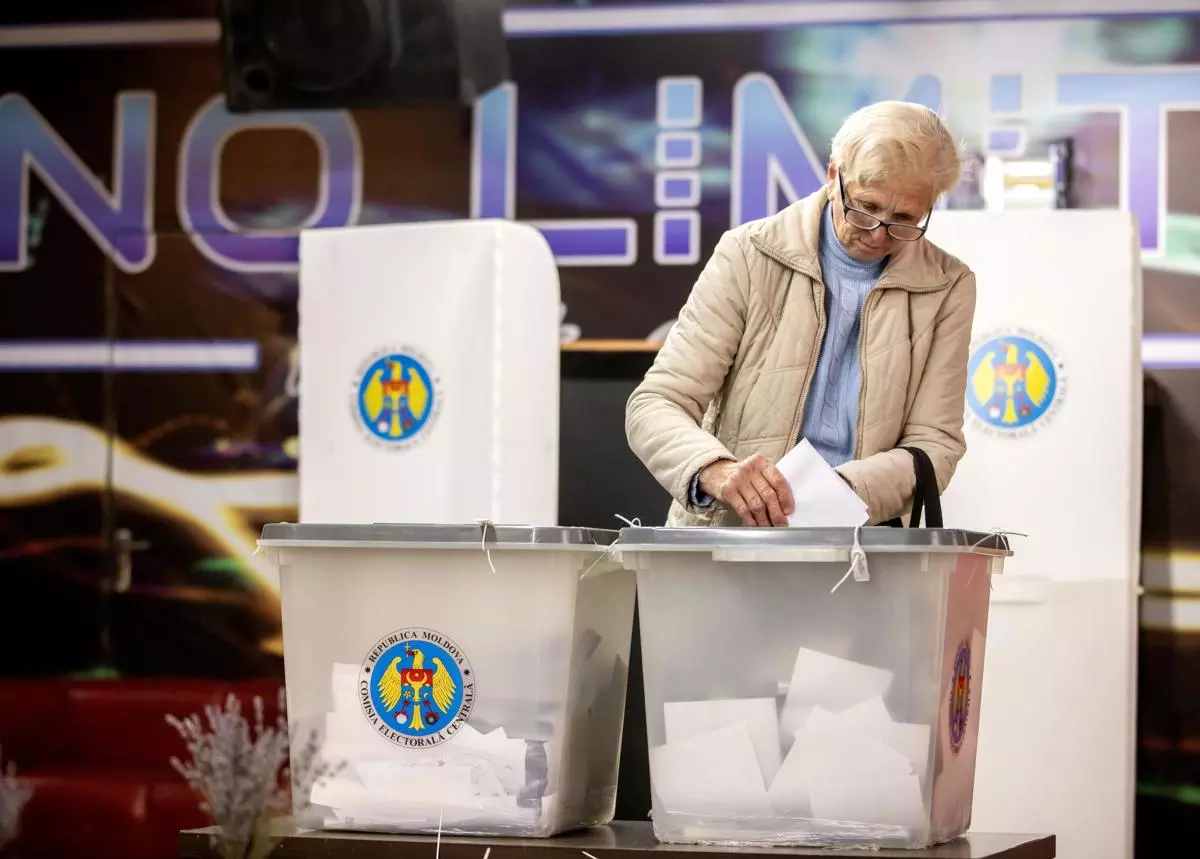
On November 3rd, the second round of the presidential elections in Moldova will take place, in which President Maia Sandu will face Alexandr Stoianoglo, a former attorney general linked to Russia who received around 26% of the votes in the first round.
Maia Sandu has publicly denounced alleged electoral fraud and has warned about attacks on freedom and democracy in her country. According to the president, criminal groups were trying to disrupt the electoral process in order to instill fear and panic in society.
In the first round of elections, Maia Sandu led with 42% of the votes, but as she did not achieve an absolute majority, she will face a second round. Sandu has expressed her concern about what she considers an unprecedented attack on freedom and democracy in Moldova.
The president has accused criminal groups, allegedly backed by hostile external forces to national interests, of attempting to buy 300,000 votes to manipulate the electoral results. Sandu has also denounced Russian interference in the electoral process to hinder Moldova's possible accession to the European Union.
Voting abroad has been crucial in the electoral outcome, as Moldovans overseas have largely supported the country's accession to the EU. By a narrow margin, the "yes" for European Union membership has surpassed the "no" in a referendum held parallel to the presidential elections.
Moldovan authorities have accused Russia of carrying out a "hybrid war" to destabilize the country and obstruct its path to the European Union. Among the accusations are funding for pro-Russian opposition groups, spreading false information, and alleged support for vote buying.
Maia Sandu has firmly led the campaign in favor of Moldova's accession to the EU, and her victory in the second round of the presidential elections could mark an important shift in the country's foreign policy.
